
CFReSHC is a collaborative of patients, clinicians, and researchers working together to improve the sexual and reproductive health (SRH) knowledge, resources, and standards of care for people with CF.
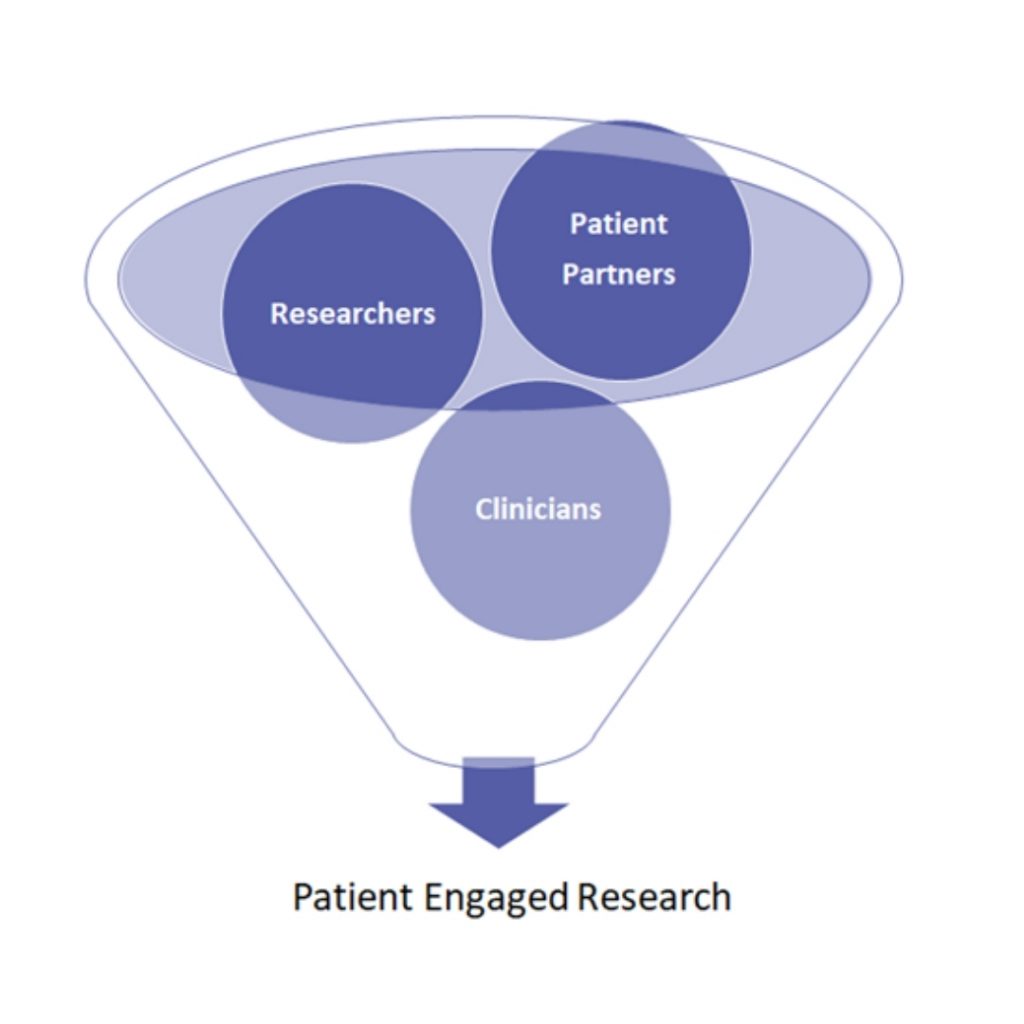
Our mission was to complete patient-engaged research through partnerships with people with CF, researchers, and advocates. Our research responded to the health needs of the CF community, provided data for healthcare professionals, and ultimately paved the way for improved reproductive and sexual health resources, healthcare, and knowledge for people with CF.
How we are different:
Typically, researchers develop research questions, solicit funding, and conduct research without patient input. CFReSHC uses the principles of patient-engaged outcomes research (PCOR), where people with CF are active participants throughout the entire research process: from identifying research priorities and questions, to participating in project design and grant writing, to study implementation and dissemination.
What we have accomplished:
We held virtual meetings for people with CF, featuring an expert speaker who presented on a focus topic and answered audience questions. Afterwards, attendees discussed the focus topic in structured breakout groups. This allowed attendees to share their stories in a supported environment while also enabling patient participation in the research process through identifying and prioritizing research priorities.
We built a Patient-Driven PCOR Lab for Researchers, Clinicians, and Other Experts (LeTTR; Lab for Establishing Transdisciplinary Team Research). Lab stakeholders translated patient-generated research questions into studies designed and executed by Researchers, Clinicians, and other Experts that include patient partners throughout the research process.
Governance Board
The board was composed of elected patients, researchers, and clinicians. Members directed CFReSHC activities by making strategic decisions about future collaboration and projects. Members served on subcommittees, delegated tasks, submitted research proposals, and handled meeting planning, recruitment, and communication.
Patient Task Force
Members of the PTF attended monthly meetings, voted on research priorities, and received a monthly newsletter on CFReSHC activities.
Researchers, Clinicians, and other Experts Research Lab
Members provided expertise on SRH issues, served as PTF speakers, and sought funding for CFReSHC research priorities.
CFReSHC Co-Founders:
Emily Godfrey
Co-Founder

Sandy Sufian
Co-Founder
Acknowledgements
The CF-SRH Resource Guide has been a five-year intensive project. It could not have been created without the support of our team members, chapter writers, expert consultants, CF clinic teams, website designers, and funders.
First, we would like to thank Dr. Patricia Walker, who conceived the idea as a CFReSHC project. She has been a strong advocate for patient-centered care, recognizing the value of patient voices, priorities, and expertise on the topic of sexual and reproductive health.
We extend our sincerest gratitude to the original Impact Award team members, who were incredible partners in recruiting writers, leading chapter writing teams, and developing the organization and structure of the Guide. Their dedication, drive, and commitment to improving people with CF’s sexual and reproductive health are greatly appreciated. We thank Georgia Brown, who, as patient lead, expanded the Guide to men’s issues, directed and revised numerous chapters, and helped edit the first iterations of the Guide. We thank and recognize Jennifer Kyle, who has been an incredible patient lead and partner, for expanding the Guide, helping to add the modulator and mental health sections to each chapter, recruiting and leading the chapter teams, and working with the website designer to finalize our website/Guide webpages.
We would also like to thank our CFReSHC patient-partners, including all the women and men who worked on this guide, either by writing chapters, presenting their work at a Patient Task Force session, attending those sessions to share their experiences and to brainstorm with us, replying to our polls, and engaging with us on social media. The hard work of our chapter writers is especially appreciated; these chapters were not easy to write and required many hours to conceptualize, research, write, attend meetings, and make revisions.
Our expert consultants and the CF clinic teams took the time to review assigned chapters for accuracy and attend meetings with us to offer constructive feedback. We appreciate their time and feedback to ensure the Guide’s scientific rigor and utility. Two physician assistant students also conducted a referral network project to review and refine the language of the priority questions, enabling patient-centered, provider-patient communication.
We especially thank Dr. Jennifer Taylor-Cousar, MD, for agreeing to disseminate chapters from the Guide (3.0) in her clinic, which has allowed us to understand how best to utilize the Guide in the clinic and serve adult patients. We appreciate the time and interest of all our contributors and partners in ensuring this guide resonates with providers and is valuable to patients.
This project could not have been completed without the support of our funders, the Cystic Fibrosis Foundation (Award number: SUFIAN18IM-24IM; IRB exemption: 20190681-124636-1) and PCORI (Award number: 10569-U Wash). Our CFF Impact Award Program Officers, Piper Beatty and Melody Zelenz, were extremely helpful with their guidance and logistical support. We are very appreciative of the efforts of Caitlin Mitchell at the Cystic Fibrosis Foundation’s Community Voice, who assisted with our chapter writer recruitment from 2023-2025, and all the men and women who helped update and write new chapters for the guide. The Head and staff of the Department of Medical Education at the University of Illinois Chicago provided invaluable, behind-the-scenes support for this grant. Mallika Patil, the Impact Award project manager and website designer, as well as Katie Malik and Madeline Lee, our Community Engagement Award website designers, offered their website expertise and lent their assistance in putting this guide online and revising our website.
Works Cited
- Rousset Jablonski C, Reynaud Q, Perceval M, et al. Contraceptive practices and cervical screening in women with cystic fibrosis. Human Reproduction. 2015;30(11):2547-2551. https://www.ncbi.nlm.nih.gov/pubmed/26345688. doi: 10.1093/humrep/dev217.
- Gage LA. What deficits in sexual and reproductive health knowledge exist among women with cystic fibrosis? A systematic review. Health & Social Work. 2012;37(1):29-36. https://www.ncbi.nlm.nih.gov/pubmed/22908479. doi: 10.1093/hsw/hls003.
- Kazmerski TM, Sawicki GS, Miller E, et al. Sexual and reproductive health behaviors and experiences reported by young women with cystic fibrosis. Journal of Cystic Fibrosis. 2018;17(1):57-63. http://dx.doi.org/10.1016/j.jcf.2017.07.017. doi: 10.1016/j.jcf.2017.07.017.
- Fair A, Griffiths K, Osman LM. Attitudes to fertility issues among adults with cystic fibrosis in Scotland. Thorax. 2000;55(8):672-677. http://dx.doi.org/10.1136/thorax.55.8.672. doi: 10.1136/thorax.55.8.672.